
What this covers
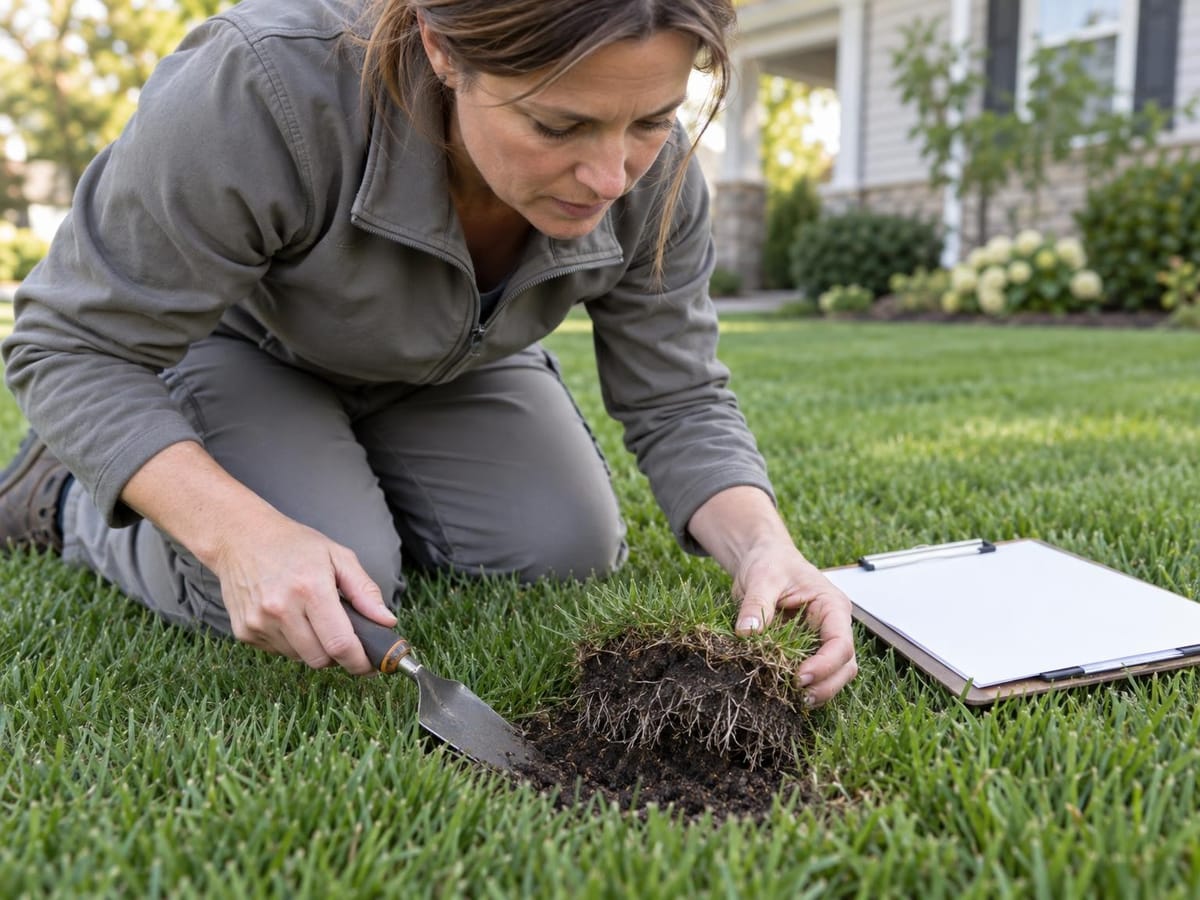
A lawn that browns in irregular patches and lifts easily at the edges often has grubs feeding on its roots. Skunks, raccoons and birds digging in the lawn are another sign. A grub request starts with a look beneath the turf: lifting a small section to see the roots and count what is there.
Where a lawn has a history of grubs, preventive treatment is usually timed for early summer, before the young grubs feed. Damaged areas then need raking out and reseeding. Ask how the business checks for grubs and other surface insects such as chinch bugs, and what it suggests for the areas that died back.
Scope
| What is reviewed | Brown or loose patches, animal digging, past grub problems, and root depth |
|---|---|
| Common work | Grub checks, preventive or targeted treatment, and repair of damaged areas |
| To confirm before treatment | Whether treatment is needed, timing, products used and how damaged areas are repaired |
| Pricing | Quoted by the business after it has seen the lawn. |
How a request works
You describe the damage
Where the patches are, when they appeared, and any animal digging.
The turf is checked
The business will explain what it finds under the grass.
A plan is agreed
The business will confirm treatment, repair and pricing before any visit.