
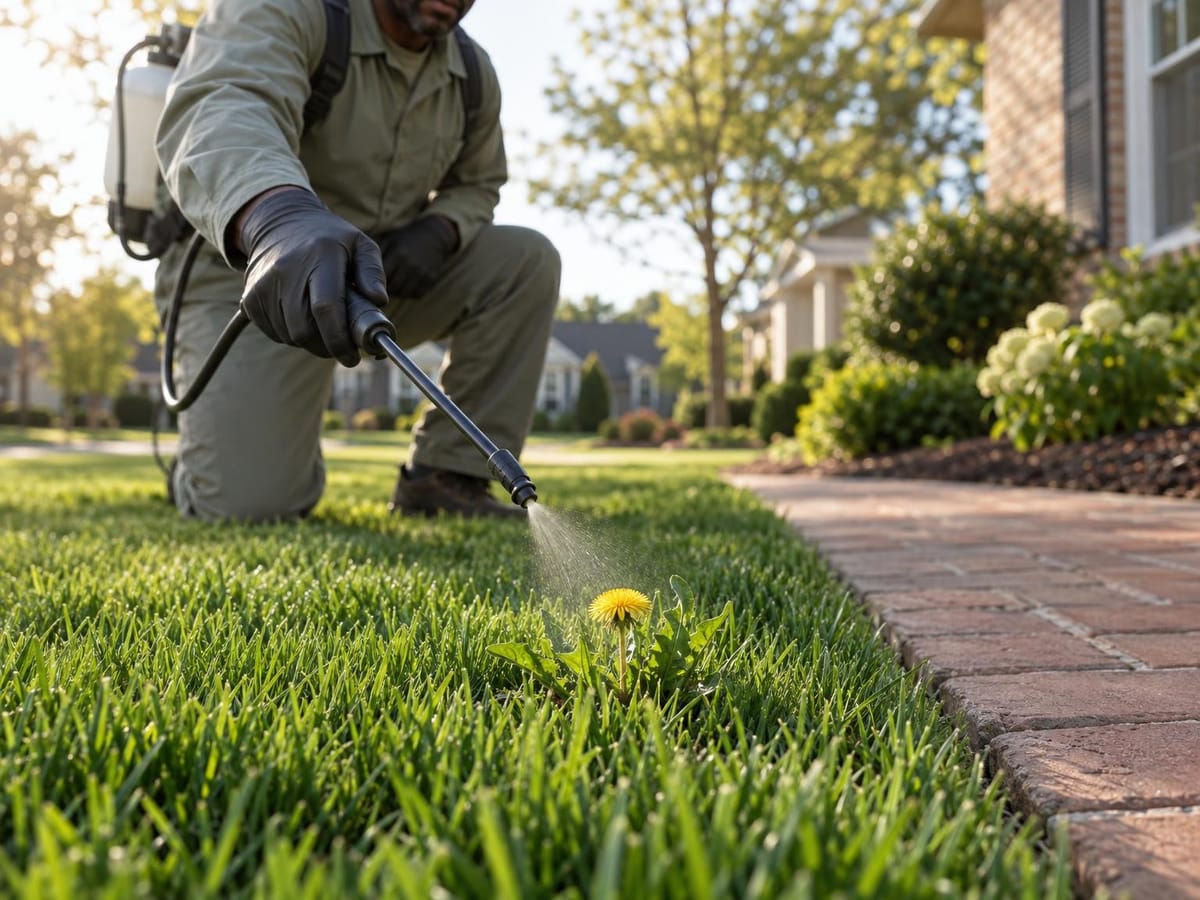
What this covers
Weeds move into the gaps a lawn leaves them. A weed-control request starts with which weeds are there and why: bare spots, thin shade areas, compacted soil or a lawn cut too short. Crabgrass and other grassy weeds are usually prevented before they sprout; dandelion, clover and other broadleaf weeds are treated while they grow.
Good programs treat only what needs treating and pair it with the things that crowd weeds out: feeding, overseeding thin areas and mowing at the right height. Ask what products are used, how visits are announced, and how long to stay off the lawn afterwards.
Scope
| What is reviewed | Which weeds are present, where they cluster, thin or bare areas, and mowing height |
|---|---|
| Common work | Pre-emergent visits for crabgrass, spot treatment of broadleaf weeds, and follow-up checks |
| To confirm before the first visit | Products used, re-entry guidance for people and pets, and how notification works |
| Pricing | Quoted by the business after it has seen the lawn. |
How a request works
You describe the weeds
Photos of the worst areas help; the business can identify most weeds from them.
The lawn is assessed
The business will explain what is growing and why it is getting in.
Treatment is scheduled
The business will confirm timing, products and pricing before the first visit.