
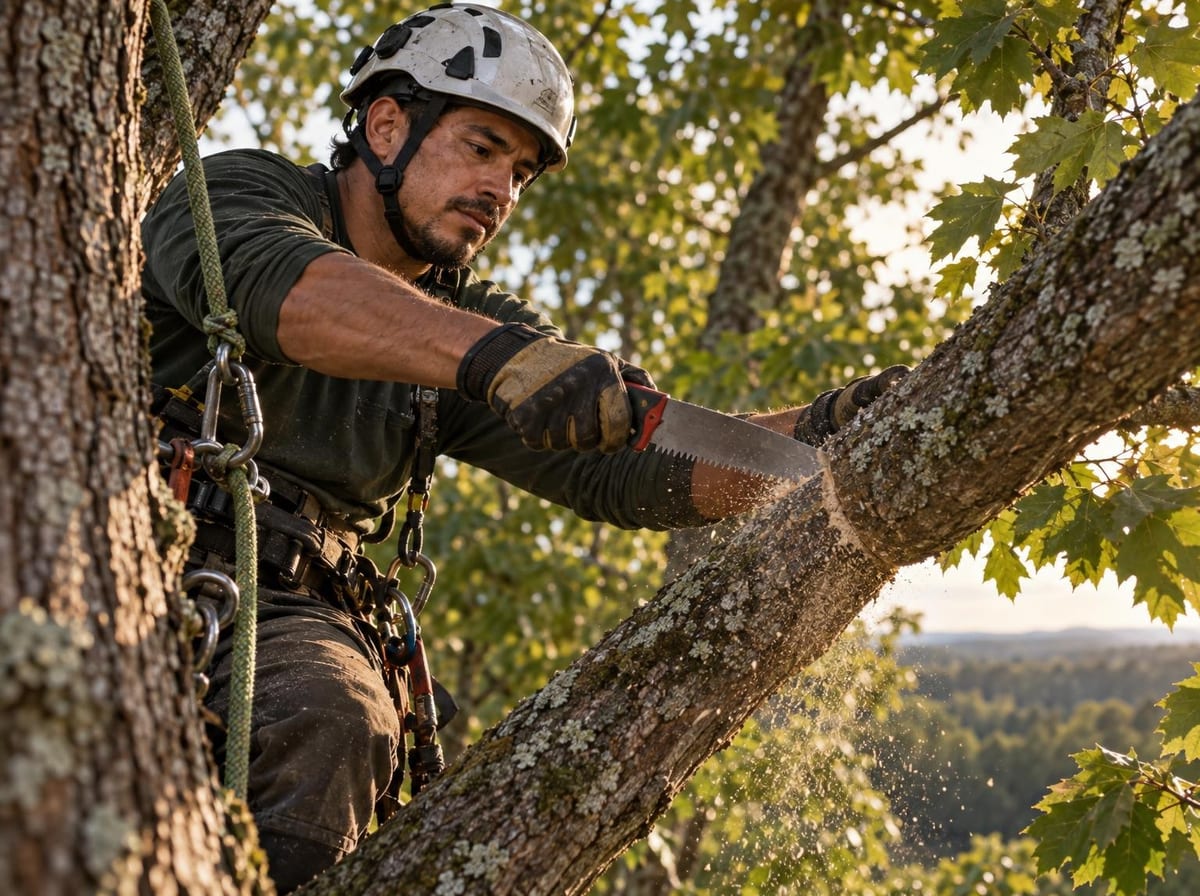
What this covers
Most pruning requests come from one of three things: branches too close to a roof or a drive, dead limbs over somewhere people walk, or a canopy that has grown heavy and one-sided. Each of those calls for a different approach, and the difference between them is where the cut is placed rather than how much comes off.
Stonepine reduces to a lateral rather than topping. Topping removes height quickly and leaves stubs that push weak regrowth, which is how a tree becomes a bigger problem three years later. Reduction cuts back to a limb that can take over as the new leader keep the tree’s shape and its structure.
Scope
| What is reviewed | Canopy structure, deadwood, clearance over structures and paths, weight distribution, and previous cuts |
|---|---|
| Typical work | Crown cleaning, deadwood removal, clearance pruning, and reduction back to a suitable lateral |
| Not done here | Topping, lion-tailing, and spike climbing on trees that are being kept |
| Timing | Species and season affect when a tree is best pruned. The assessment says whether waiting is the better option. |
How a request works
You point at the problem
The limb over the roof, the dead wood, or the side that has grown heavy.
The canopy is read
Structure, previous cuts, and clearance are assessed to decide where cuts belong.
You approve the scope
What comes off and what stays is confirmed with you before any work is scheduled.