
What this covers
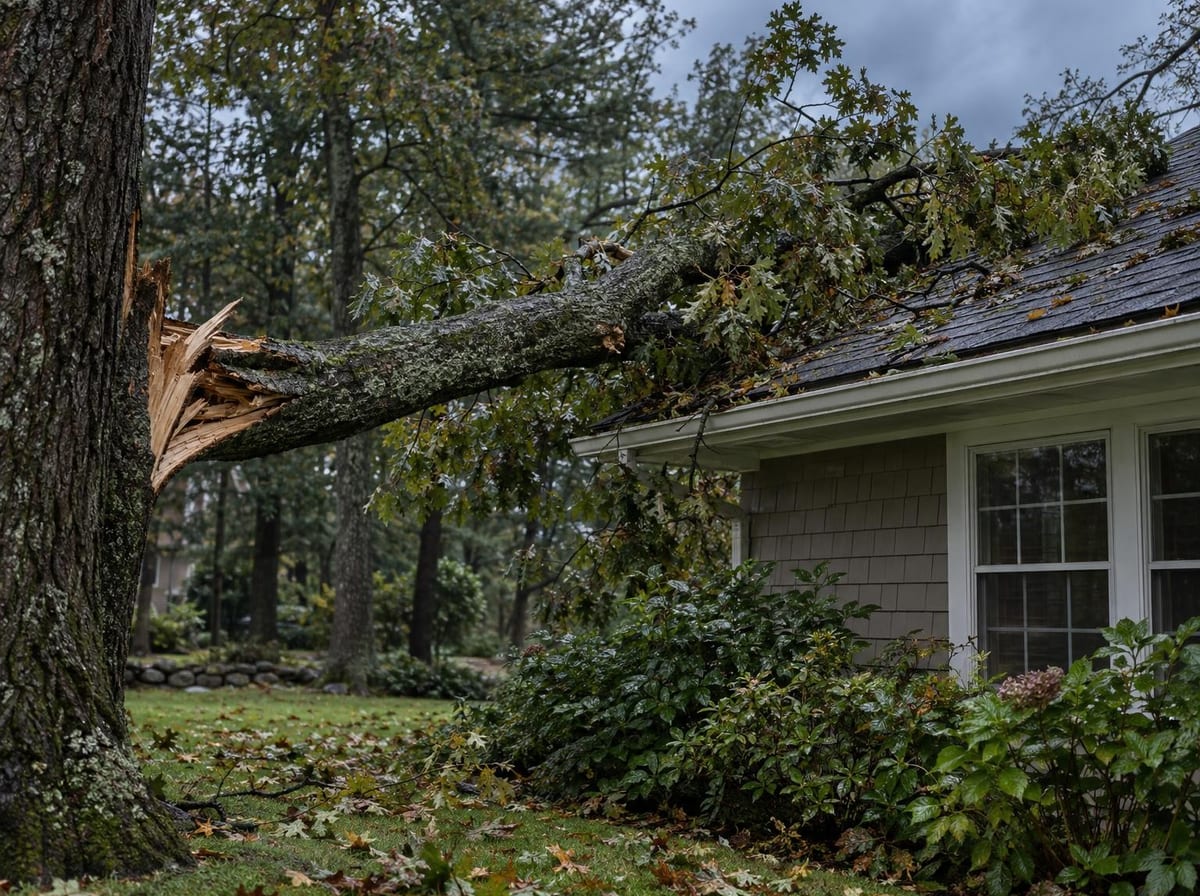
Storm work is triaged on what is still under tension. A limb resting on a roof, a split union that has not fully failed, and a branch hung up in the canopy are all loads that can move again without warning. What you can safely see and describe from the ground is what lets the business decide how urgent a request is.
Two situations change the answer immediately. If anything is touching or near a utility line, that is the utility’s call and not a tree crew’s, and you should treat the area as live. If a limb is bearing on a structure people are using, say so when you make contact, because it changes how the request is handled.
Scope
| Tell the business | What is holding it up, what is underneath, whether anything is touching a line, and whether the area can be kept clear |
|---|---|
| Handled first | Loads bearing on an occupied structure, and splits that have not finished failing |
| Not a tree crew’s job | Anything on or near a utility line. Report it to the utility and keep clear of the area. |
| Scope | Storm work is often staged: make the situation safe first, then assess what remains of the tree. |
How a request works
Describe what you can see
From the ground only. What is holding it, and what is underneath.
The request is triaged
Stonepine explains how it prioritises the request and what it needs from you.
Made safe, then assessed
The immediate load is dealt with first. What happens to the rest of the tree is a separate decision.