
What this covers
When a tree starts to look thin or the leaves come out small, the canopy is where you notice it but rarely where it started. Compacted soil over the root zone, grade changes that buried the root flare, trenching that cut roots on one side, and girdling roots from a nursery container all show up in the canopy a season or more later.
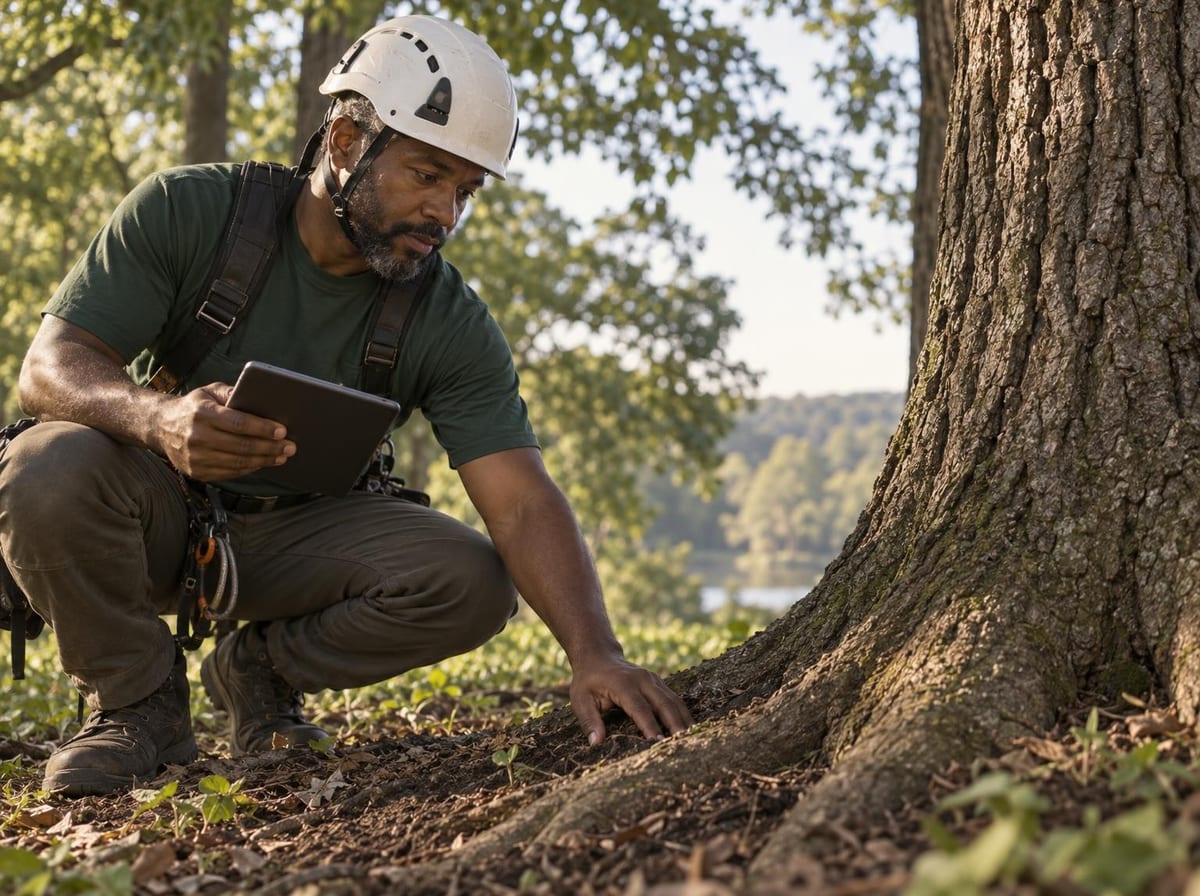
So an assessment starts at the bottom. Where the root flare actually sits, what the soil is doing, what changed around the tree recently, and how the tree has responded over the last few seasons. For new planting the same logic runs forwards: species suited to the site, placed where it can reach full size without meeting a roof or a line, and planted at the right depth.
Scope
| Starts at | The root flare, the soil, and recent site changes rather than the canopy |
|---|---|
| Common causes | Compaction, buried root flare, severed roots from trenching, girdling roots, and drainage changes |
| Planting | Species suited to the site, sited for its mature size, and planted with the flare at the correct level |
| Limits | Where a diagnosis needs laboratory work or a regulatory opinion, you are told that rather than guessed at |
How a request works
Describe the change
What you have noticed and roughly when it started.
The base is assessed
Root flare, soil, and what has changed around the tree recently.
Options explained
What can be addressed, what needs time, and what is beyond what pruning can fix.